Begin With the Room, Not the Fixture
An italian glass chandelier can become the visual center of a home, but its success depends on more than beauty alone. Before considering colors or decorative details, examine the room’s proportions, ceiling height, furniture arrangement, and natural light. A broad dining table may call for a horizontal composition, while a tall entrance hall can accommodate a cascading design. In smaller rooms, a compact chandelier with transparent elements may create presence without making the ceiling feel crowded.
The intended atmosphere matters just as much as scale. Clear glass tends to feel light and architectural, whereas amber, smoke, or opaline finishes create a softer mood. Elaborate arms and floral forms suit expressive interiors, while restrained blown-glass shapes can complement contemporary spaces. Rather than matching every object, look for a meaningful connection: the glass might echo the curves of a staircase, repeat a color found in artwork, or provide a deliberate contrast to stone, wood, and metal surfaces.
Understand What the Glass Contributes
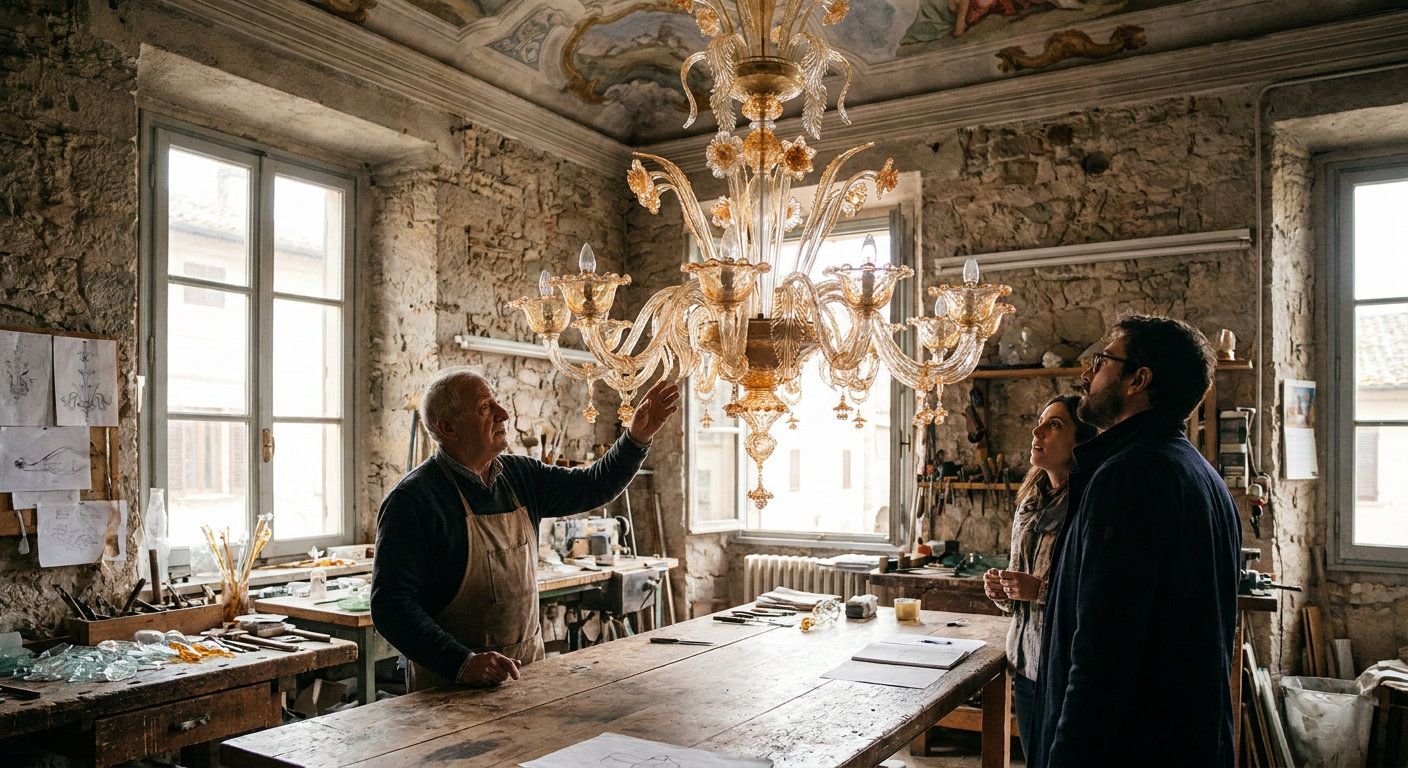
Handcrafted glass is never merely a decorative shell around a bulb. Its thickness, texture, shape, and finish influence how light spreads through the room. Ribbed surfaces can produce lively reflections, frosted glass can soften glare, and transparent elements can cast sharper highlights across nearby walls. Exploring a specialist italian glass chandelier collection can reveal how pendants, blown components, glass plates, and period-inspired forms support different lighting concepts, from understated compositions to large bespoke installations.
Craftsmanship is often visible in subtle variations rather than perfect mechanical uniformity. Slight differences between hand-finished components can add depth and character when they are part of a coherent design. It is useful to assess the chandelier both illuminated and unlit, since it remains an important object throughout the day. Details such as ceiling roses, suspension cables, metal finishes, and attachment points also deserve attention; these practical elements determine whether the final piece appears integrated or visually disconnected.
Build a Layered and Livable Lighting Scheme
A chandelier rarely needs to provide every type of light in a room. The most comfortable interiors combine ambient illumination with focused task lighting and quieter accent sources. Over a dining table, the chandelier may establish mood while wall lights balance the room’s edges. In a living area, floor lamps can support reading and reduce dependence on a bright central source. Compatible dimming can further expand the range between functional evening light and a more intimate setting.
Installation planning completes the design process. The height should preserve sightlines, support comfortable movement, and suit the fixture’s visual weight. Bulb shape, color temperature, output, and accessibility for cleaning or replacement can affect everyday enjoyment as much as ornamentation. A well-chosen italian glass chandelier therefore works on several levels at once: it organizes the room, enriches its materials, and shapes the experience of light. When proportion, glass character, and supporting illumination are considered together, the result can feel distinctive without sacrificing comfort.